 Fencalc XA2021
Weight by area
When multiple fenestration types are used, the average performance must reflect their areas. A large sliding door affects the result more than a small bathroom window, even if both have valid supplier values.
Use area-weighted averages for mixed window and door types.
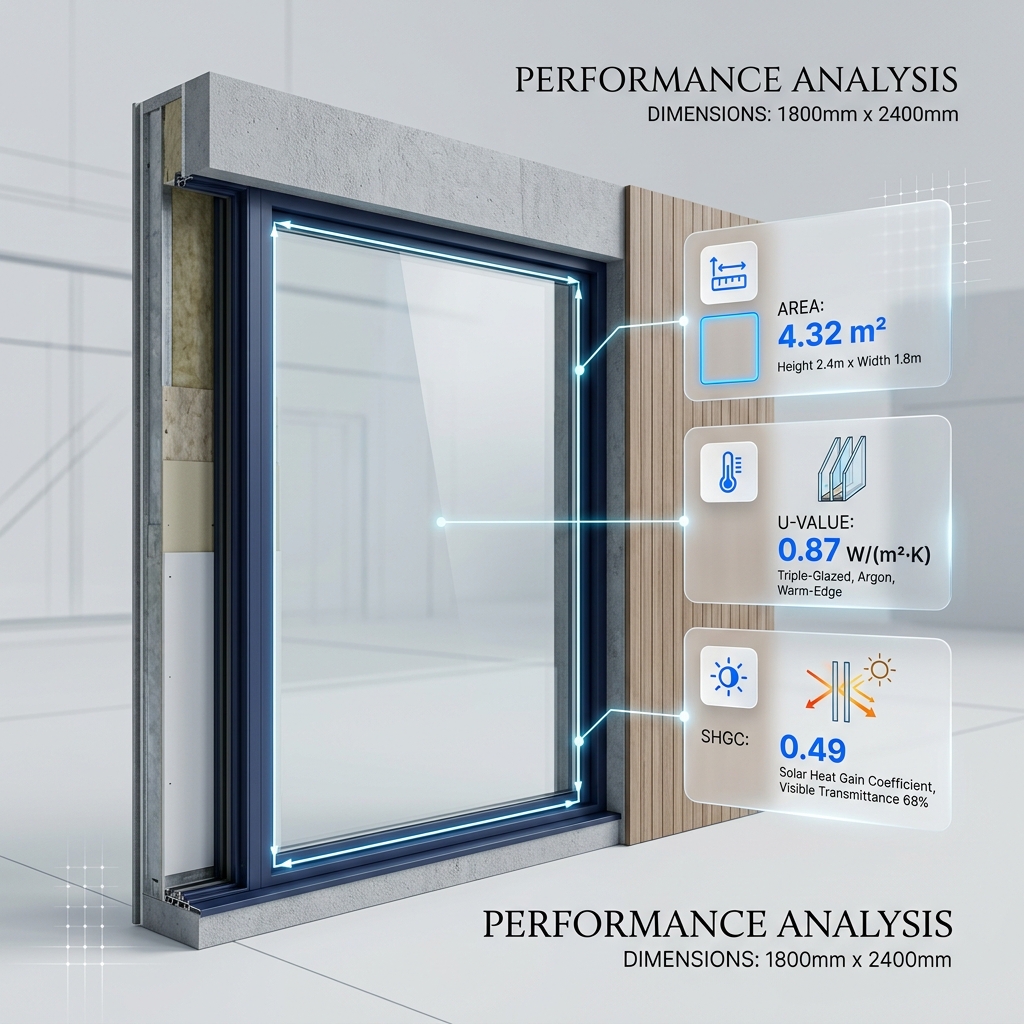
By the end of this lesson you should be able to calculate weighted U-value and SHGC values for a storey or orientation group.
When multiple fenestration types are used, the average performance must reflect their areas. A large sliding door affects the result more than a small bathroom window, even if both have valid supplier values.
Calculate U-value averages per storey for the relevant vertical fenestration set. For SHGC, keep the orientation groups separate where the standard applies different limits.
Multiply each element area by its performance value, add those products, then divide by the total area in that assessment group. Repeat separately for U-value and SHGC.
Use the result cards to compare weighted values against the applicable table row. A single non-compliant unit may still pass in a weighted group, but only if the total weighted result complies.
A single storey has 52 m2 nett floor area and three glazed elements: 1.8 m2 at U 2.8 / SHGC 0.32, 5.0 m2 at U 2.2 / SHGC 0.25, and 1.1 m2 at U 3.0 / SHGC 0.35.
Enter each glazed element with its area, orientation, U-value and SHGC. Use the result cards to check glazing percentage and weighted performance.
The important decision is not only whether the numbers pass, but whether every value can be traced to drawings and supplier data.
Were area x value products used?
Element A: 3.0 m2 at U 2.8 and SHGC 0.32.
Flag the missing evidence, use a conservative assumption where appropriate, and avoid claiming compliance until the information is confirmed.