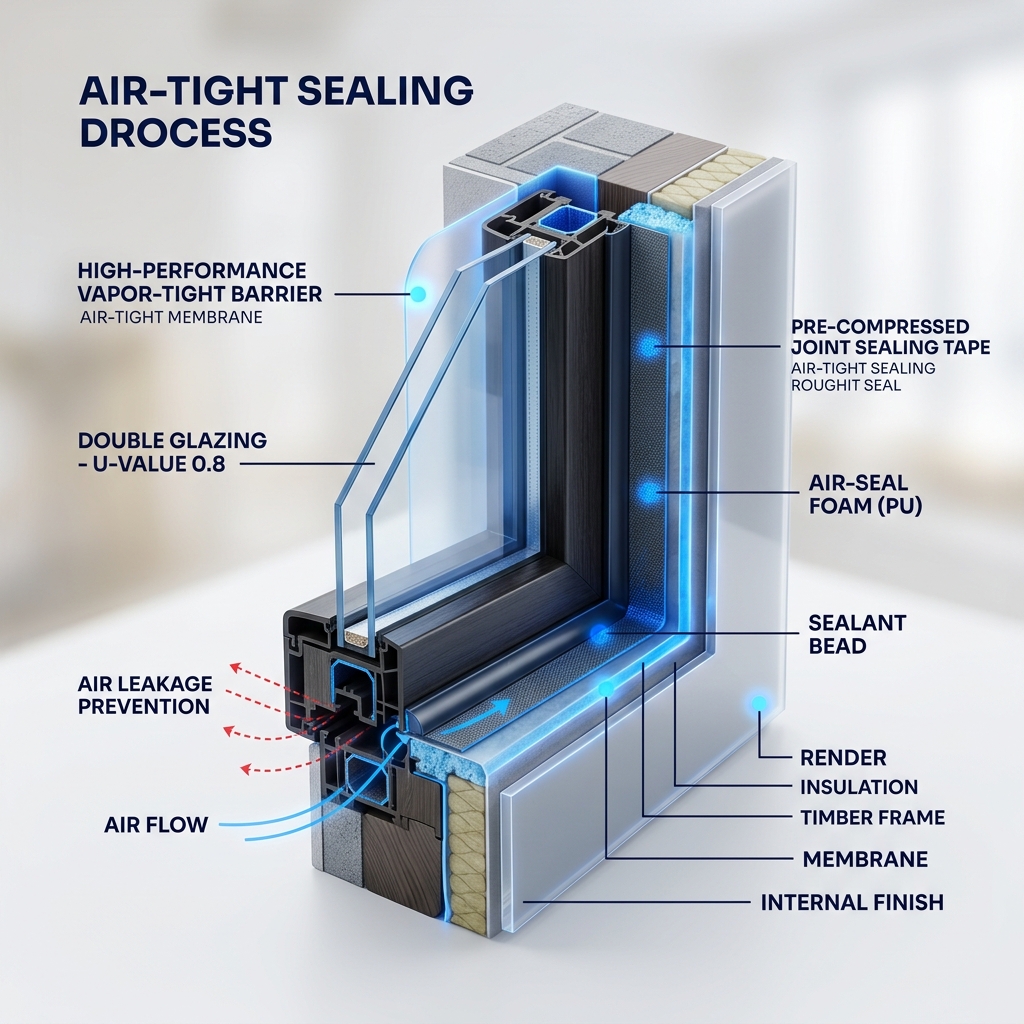
How to use the diagramRead the visual first, then connect each label to the lesson text and your calculator inputs. The aim is to make every assumption visible before you calculate.
Learning Objective
Connect air leakage control with window and door schedules.
Product performance
Windows and doors should meet applicable leakage expectations and be installed to preserve that performance.
Installation quality
Poor installation can compromise even a good product.
Practice Task
Review one window installation detail.
Add a sealing inspection note.
Calculator Tip
Keep fenestration product evidence with installation requirements.
Worked Example: Leakage Path Review
Scenario
A section shows window frames, roof penetrations and external wall junctions but no sealing notes.
Calculator Entry
Use comments or report notes to flag sealing details that need confirmation.
Step-by-step method
1Mark likely leakage paths on the drawing.
2Add sealing products or workmanship notes to the specification.
3Identify inspection points during construction.
4Keep photo or checklist evidence with the project record.
Expected conclusion
Sealing compliance depends on continuous detailing and site evidence, not one isolated product.
Common Mistakes
Treating air sealing as a product choice only, instead of a continuous envelope detail.
Missing joints around windows, doors and service penetrations.
Failing to plan site inspection evidence for sealing work.
Quick Knowledge Check
1. What should you confirm before applying this lesson to a project?
Product data is available.
2. Which piece of evidence should support the main input in this lesson?
Review one window installation detail.
3. What is the safest action if the information is incomplete?
Flag the missing evidence, use a conservative assumption where appropriate, and avoid claiming compliance until the information is confirmed.
 Fencalc XA2021