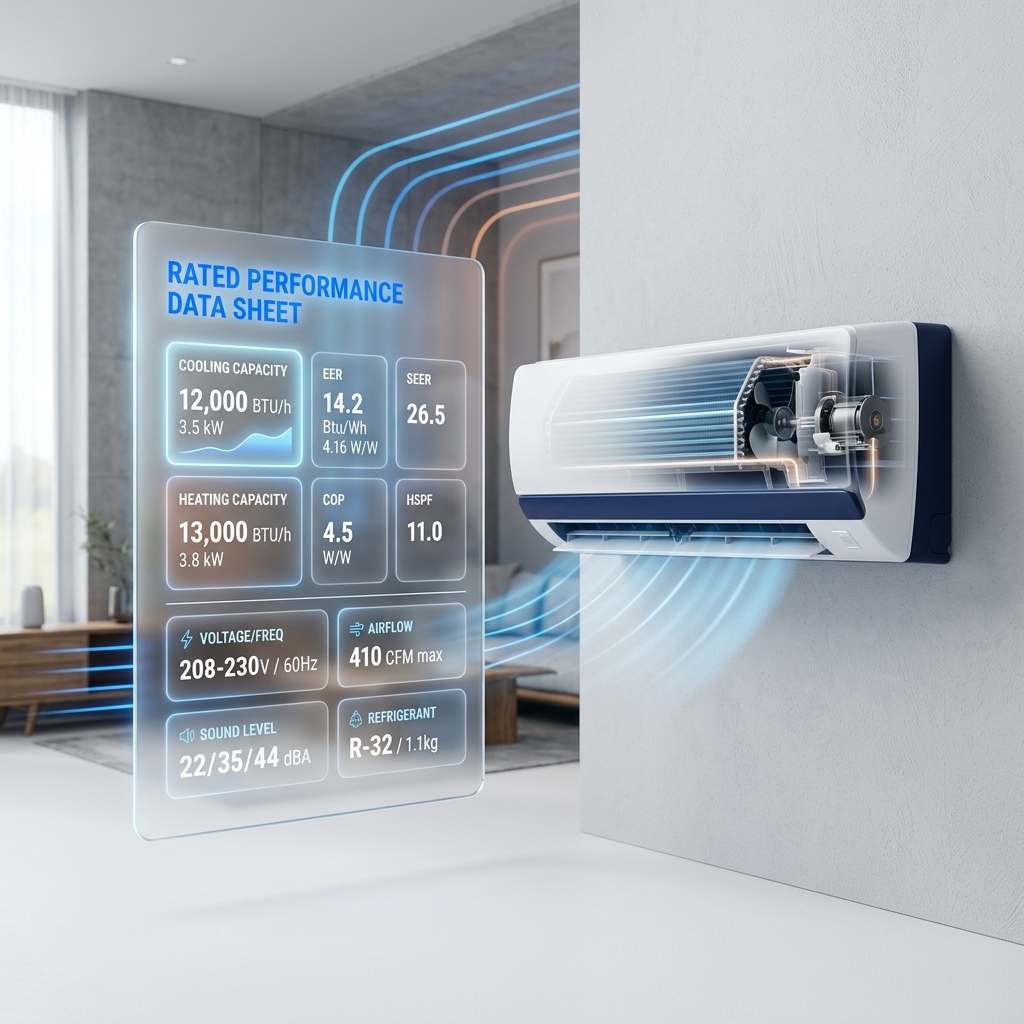
How to use the diagramRead the visual first, then connect each label to the lesson text and your calculator inputs. The aim is to make every assumption visible before you calculate.
Learning Objective
Create a clear inventory of cooling and heating equipment.
System inventory
List each air-conditioning unit or system, the spaces served and the intended operating mode.
Envelope relationship
A better envelope can reduce service loads, so air-conditioning should not be assessed in isolation.
Practice Task
Create an equipment schedule.
Map each unit to served spaces.
Calculator Tip
Use the same room names in services and envelope notes.
Worked Example: Equipment Evidence Check
Scenario
A split unit is specified for two bedrooms, but the product schedule only shows model names.
Calculator Entry
Attach equipment schedules and data sheets to the compliance record.
Step-by-step method
1Map each unit to the spaces served.
2Collect rated capacity and efficiency evidence.
3Check that sizing and controls are appropriate.
4Require substitution review if equipment changes.
Expected conclusion
The report should rely on rated performance evidence, not model names alone.
Common Mistakes
Using marketing claims instead of rated equipment performance evidence.
Assessing equipment without mapping the spaces served.
Ignoring equipment substitutions that change capacity or efficiency.
Quick Knowledge Check
1. What should you confirm before applying this lesson to a project?
Systems are listed.
2. Which piece of evidence should support the main input in this lesson?
Create an equipment schedule.
3. What is the safest action if the information is incomplete?
Flag the missing evidence, use a conservative assumption where appropriate, and avoid claiming compliance until the information is confirmed.
 Fencalc XA2021