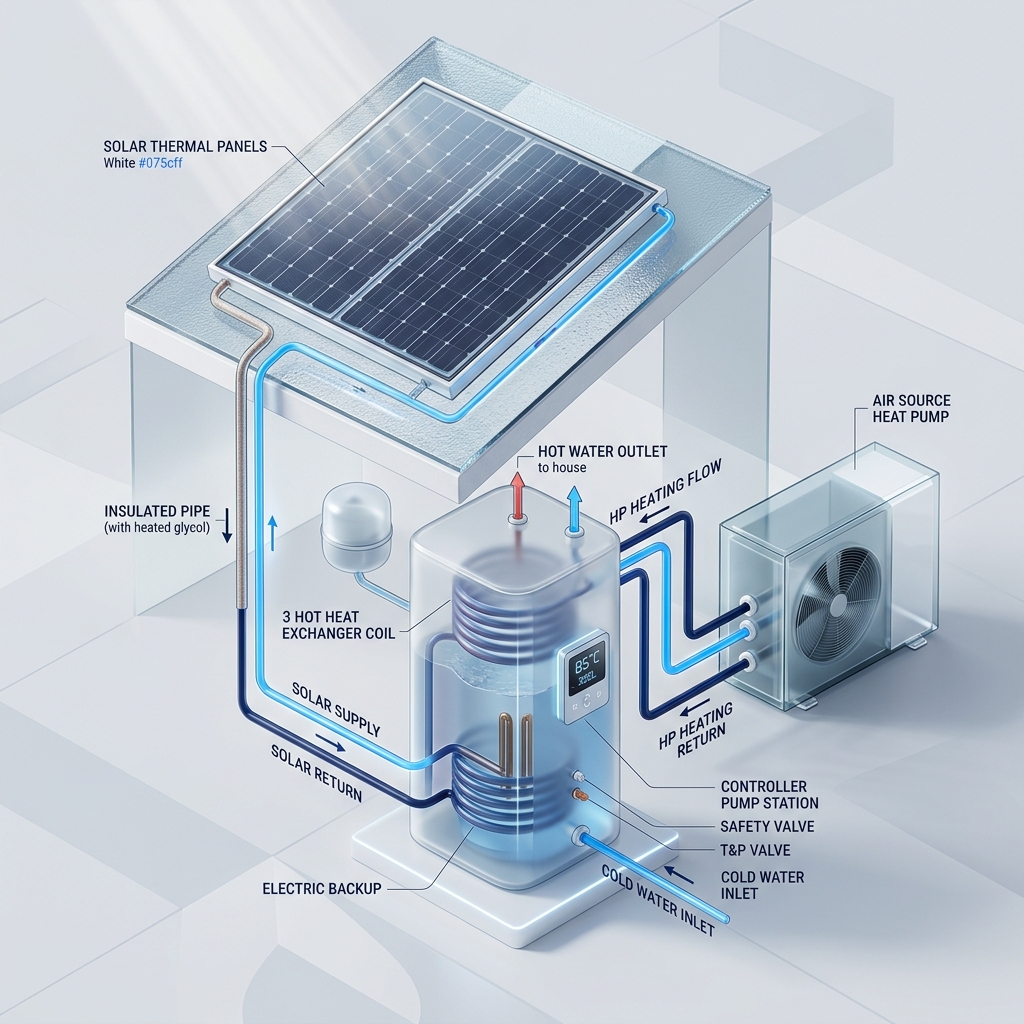
How to use the diagramRead the visual first, then connect each label to the lesson text and your calculator inputs. The aim is to make every assumption visible before you calculate.
Learning Objective
Know what hot-water information is needed for XA checks.
Annual average demand
The compliance check considers the annual average hot-water heating requirement for relevant buildings.
System inventory
List every hot-water source, storage unit and supplementary heater.
Practice Task
Create a hot-water system schedule.
Mark which systems serve occupied areas.
Calculator Tip
Keep system assumptions separate from envelope assumptions.
Worked Example: Hot-Water System Note
Scenario
A dwelling uses a heat pump water heater with electrical resistance backup.
Calculator Entry
Record system type, source contribution and evidence notes in the services section.
Step-by-step method
1List the hot-water source, storage capacity and backup heater.
2Confirm product evidence for the heat pump.
3Describe the contribution of the non-resistance source.
4Match the report to the plumbing layout and schedule.
Expected conclusion
Avoid vague claims. The installed system and backup role must be clear.
Common Mistakes
Calling a system solar-ready without documenting the installed contribution.
Forgetting backup electrical resistance heating in the compliance note.
Not matching the XA report to the plumbing layout and product schedule.
Quick Knowledge Check
1. What should you confirm before applying this lesson to a project?
Demand is identified.
2. Which piece of evidence should support the main input in this lesson?
Create a hot-water system schedule.
3. What is the safest action if the information is incomplete?
Flag the missing evidence, use a conservative assumption where appropriate, and avoid claiming compliance until the information is confirmed.
 Fencalc XA2021